3 minutes of silence
Why you should learn avalanche knowledge directly on the mountain without making the wrong decisions.
Simone Vogl-Umschaden and her husband Gustav Philipp Vogl have digitized avalanche courses because they are convinced that this creates the kind of decision-making confidence that can really prevent avalanches.
The former professional snowboarder, herself a victim of an avalanche, and the e-learning expert have digitized avalanche training and practice under real conditions.
But let's start from the beginning:
"An avalanche is the most stupid teacher imaginable."
Winter, 2009:
It was one of those tours that could have ended well. We would have skied off and had a good night's sleep in the valley. We would have philosophized afterwards over a yeast dumpling about how the decision was tricky, but good in the end. And the worst thing: We would have saved this wealth of experience and the wrong reward for the next tour.
Because: "Just because there's no avalanche doesn't mean the decision is the right one," is the motto of one of our mountain guides at schneeWISE, Philipp Leodolter.
And on this day, in February 2009, the decision was not the right one. A snow slab broke loose. I was swept 300 meters and swallowed up by the avalanche. Silence. Panic. Hope. And a thought screaming at the top of my voice: "I'm not getting enough air!" After 3 endless minutes, I heard my colleague and he shoveled me free. Happiness. Relief. Shame.
Today I know that this wrong decision was not the first in my ski touring history. It was just the first to be punished with the most severe teacher of all: the avalanche.
90% of avalanches are triggered by the victims - or their group
90%! This is a statistic that cannot be downplayed. In the winter of 2024/25, 28 people died due to an avalanche in Austria alone. If we follow the statistics, 27 of the 28 people died in an avalanche because they themselves or people in their group did not act correctly.
In winter 2009, but also on other tours before that, I wasn't able to call up the knowledge from my courses, I got attached to the group, left myself behind and wasn't able to make decisions for myself independently and with confidence.
"He must know" - typical heuristic traps
The so-called heuristic traps, i.e. talking down gut feelings and errors in thinking when making quick decisions, lurk everywhere on a ski tour or off the groomed slopes.
Heuristic traps affect both beginners and experienced ski tourers. Here's an overview of the most common ones, some of which you've probably heard or thought of yourself:
- Familiarity: "I've skied this slope umpteen times before." But what are the conditions like this winter, today?
- Scarcity: "Get in quickly before there are lanes." Hasty decisions blind us to conditions.
- Social pressure: "Oh, come on." Group dynamics are a big issue, primarily (but definitely not only) for young people.
- Authority: "He:she must know." And ignoring their own warning signs.
- Plan for the day: "But that's what we had in mind today." Changing your mind is part and parcel of the mountain; weather and conditions can change.
- Time pressure: "Quickly to the last descent." Off-piste, a shortcut can take until spring.
LVS courses & equipment
The figures from the training institutes (Alpine Club or other alpine schools) show that there is a great willingness to take ski touring and avalanche transceiver courses. Almost all ski touring enthusiasts have attended such courses. The equipment and avalanche transceivers are also becoming better and easier to use. The problem with avalanche accidents is therefore neither a lack of avalanche transceiver courses nor a lack of shovels or probes.
And in my case, I also had all of this with me, but even after several avalanche courses and tours with mountain guides, I didn't have the necessary confidence to make wise decisions. I simply lacked the practice of correct actions.
Bridge to live courses: digital practicing
After an avalanche transceiver course, there is often a lack of direct expert feedback in real touring practice. Time pressure, stress, group dynamics or changing weather conditions make it difficult to make clear decisions. As there are rarely clear yes/no answers, processes and risk assessment are required - but it is precisely these aspects that are quickly forgotten without continuous practice. And how much can you really practise, because how many tours can you do in one winter? And how many of them are difficult or in complex conditions?
The foundation of schneewise.com
My husband Gustav was managing director of an e-learning agency at the time, so one thing led to another and www.schneewise.com was born. We wanted to make practicing possible. We wanted to create decision-making security. We wanted to sharpen independence. We want nothing less than to reduce avalanche deaths.
Train decision-making confidence
Our avalanche training courses therefore start exactly where practical courses end: with practicing. We extend the knowledge from the avalanche courses and add two factors: practicing and practicing variations. Through the repeated (!) application (!) of knowledge, with the reflection of the decisions made by our mountain guide team and the strengthening of your own opinion, you will make better decisions.
The training sessions should be held regularly by anyone who enjoys skiing in deep snow: Teens off-piste, ski tourers, vacationers and beginners.
Gamification - everything for the pulse!
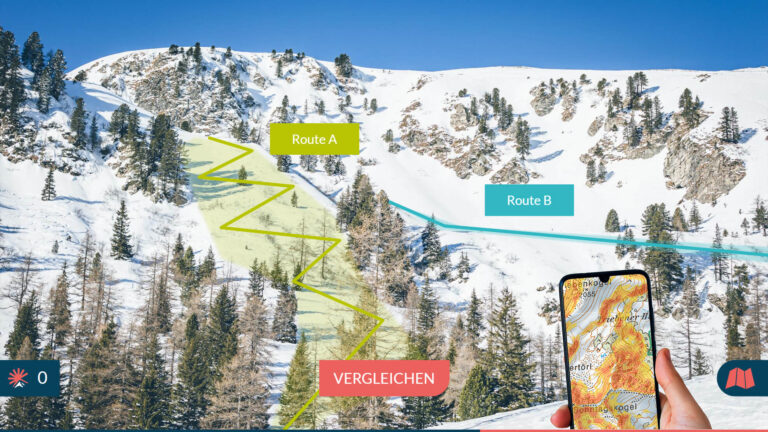
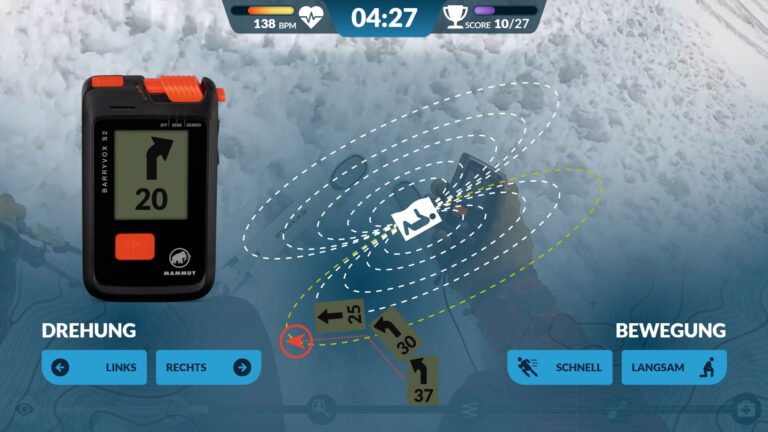
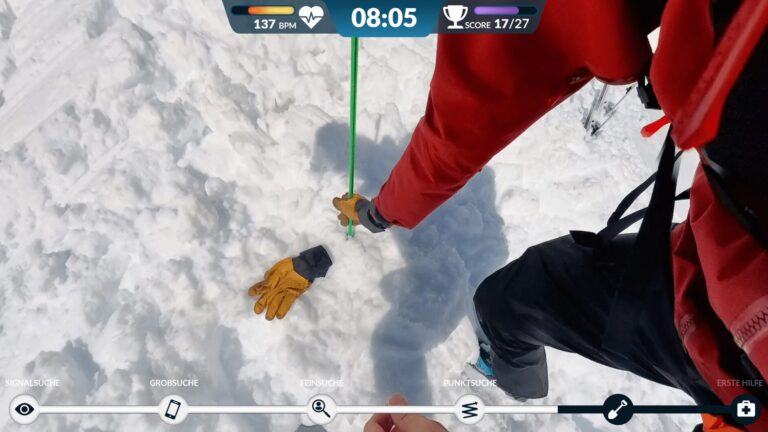
Our courses are filmed on real slopes under real conditions. They are designed by e-learning experts, developed with mountain guides and filmed by professionals. The courses cover different variations, combining knowledge and its application so that learning is possible at all.
And they're fun: the movie's POV view, gamification features and micro-decisions get your pulse racing so that you learn to act correctly even under stress.
Digital avalanche training: standard equipment for your next ski tour
I never want to go back up the mountain with as little practical knowledge, reflection and practice as I did in 2009. I believe that digital practice - especially in our current winters with sometimes more, sometimes less snow - is essential to change the statistics of avalanche deaths.
Only if you not only have knowledge, but also know how to use it in an emergency, can you enjoy your next tour. Without a guilty conscience and without fear. Today, I enjoy every tour even more, more consciously and, above all, more safely.
Digital training at schneewise.com
Our training courses are expanded every winter. This year, for example, we recently added the "Emergency avalanche" module, in which you have exactly 10 minutes to rescue the buried person. Beads of sweat on your forehead included. But there are also many variants and prevention courses available in German and English. For teens, we have developed a free app training course with the province of Tyrol, which focuses in particular on group dynamics.
Our packages are also available in a practical multi-year subscription, so you get all the practice you need at an unbeatable price! But enough advertising now, just take a look around!
I wish you a wonderful winter and look forward to receiving your feedback as soon as you have completed our digital avalanche training courses!
Your Simone