


Avalanche problems
Get to know the five typical avalanche problems
The ability to recognize and categorize recurring patterns is essential for efficient decision-making. This also applies to the assessment of avalanche danger. Five typical avalanche problems have been defined to describe recurring hazardous situations in the terrain. This categorization supports both the avalanche warning system and winter sports enthusiasts in assessing the situation.
The ability to recognize and categorize recurring patterns is essential for efficient decision-making. This also applies to the assessment of avalanche danger. Five typical avalanche problems have been defined to describe recurring hazardous situations in the terrain. This categorization supports both the avalanche warning system and winter sports enthusiasts in assessing the situation.
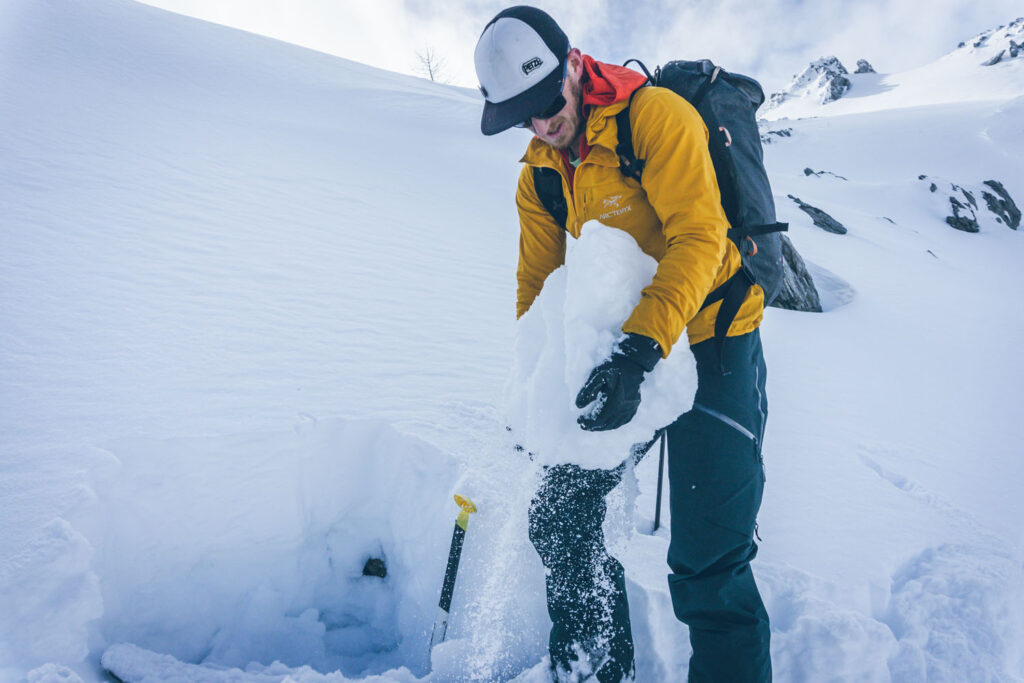
As the third part of the information pyramid, avalanche problems supplement the information on danger levels and danger spots. Each avalanche problem is characterized by the following features:
- Type of avalanches to be expected: e.g., slab avalanches, loose snow avalanches
- Spatial distribution: Where does the problem typically occur?
- Location of weak layers: Where in the snowpack is the weak spot?
- Trigger mechanism: How are avalanches triggered?
- Duration of the hazard: How long does the hazard persist?
- Recommendations for movement in the field: What precautions should be taken?
Table of contents
Fresh snow problem
Problem detection in the field
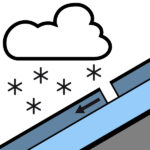
The fresh snow problem is relatively easy to recognize. Note the critical amount of fresh snow and fresh avalanches. Note that small changes in the weather (e.g. change in humidity) can significantly change the conditions for fresh snow.
Recommended behavior
Dry slab avalanches: Wait until the fresh snow has stabilized.
Dry loose snow avalanches: Pay particular attention to the risk of being swept away and falling in extremely steep terrain
Features
The problem arises due to recent snowfall or fresh snow that has recently fallen. The main influencing factor is the critical amount of new snow, which depends on several factors, such as temperature or the properties of the old snow surface.
Types of avalanches to be expected
- Dry slab avalanches
- Dry loose snow avalanches
- Spontaneous and artificial triggering
Spatial distribution
Mostly widespread and in all exposures.
Position of the weak layer in the snowpack
Mostly at the transition to the old snow surface, but sometimes also within the layers of new snow and sometimes deeper in the old snow cover.
Release mechanism
Dry slab avalanches: Additional load due to snowfall on existing or newly formed weak layers.
Dry loose snow avalanches: Lack of connection between the new snow crystals.
Duration
During the snowfall until a few days afterwards.
drift snow problem
Problem detection in the field
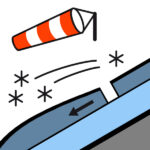
The drift snow problem is relatively easy to recognize with practice and good visibility, unless the drift snow has been overlaid by fresh snow. Observe wind signs and localize drift snow deposits. Typical clues: Drift snow deposits, crack formation, WUMM noises, fresh avalanches. However, it is often difficult to estimate the age of the drift snow and drift snow does not necessarily have to be a problem (e.g. if there is no weak layer).
Recommended behavior
Avoid drift snow deposits in steep terrain, especially at transitions from little to much snow and from soft to hard snow.
Features
The problem is caused by wind-blown snow. Drifting snow can occur both with and without simultaneous snowfall.
Types of avalanches to be expected
- Dry slab avalanches
- Spontaneous and artificial triggering
Spatial distribution
Very irregularly distributed; tends to be in areas facing away from the wind (leeward), in gullies, hollows, behind terrain edges and other windless areas. More often above the tree line than below it.
Position of the weak layer in the snowpack
Mostly at the transition to the old snow surface or within the drift snow (stratification due to changes in wind speed during a storm period) and occasionally deeper in the old snow cover.
Release mechanism
Additional load from the drift snow on a weak layer. Drift snow forms a snow slab that is particularly prone to breaking.
Duration
Drift snow can develop very quickly. The problem usually lasts from the time of transportation until a few days after the last wind impact (depending on the snowpack structure).
Old snow problem
Problem detection in the field
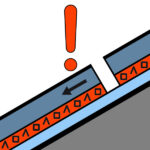
The old snow problem is extremely difficult to recognize. Signs of instability (e.g. WUMM noises) are typical, but not necessarily present. Snowpack tests can help to recognize the weak layers. Information on snowpack development and information in the avalanche situation report/avalanche bulletin are important. Fracture propagation usually takes place over long distances. Remote triggering is also possible.
Recommended behavior
Avoid large steep slopes and exercise caution. Pay attention to weather conditions and snowpack development in an area. Be particularly cautious in areas with little snow and in transitions from areas with little snow to areas with heavy snow.
The old snow problem is a major cause of fatal avalanche accidents among winter sports enthusiasts.
Features
The problem arises from existing weak layers within the old snow cover. Typical weak layers are snow-covered surface frost, deep frost (also known as cup crystals or "floating snow") or angular crystals.
Types of avalanches to be expected
- Dry slab avalanches
- Mostly artificial triggers (e.g. winter sports enthusiasts, blasting); spontaneous avalanches are rare, usually in combination with another avalanche problem
Spatial distribution
The avalanche problem can be distributed over a large area or concentrated on a small scale. It is possible in all exposures, but is more common on shady, more wind-protected slopes.
Position of the weak layer in the snowpack
Somewhere in the old snow, often deep in the snowpack. If the weak layer is covered by thicker, more stable layers, triggering becomes more difficult.
Release mechanism
Breakage of a weak layer in old snow if the additional load exceeds the strength of the weak layer.
Duration
Weeks to months; sometimes during the entire winter.
Wet snow problem
Problem detection in the field
The wet snow problem is usually easy to recognize. The onset of rain, the formation of snowballs or snow rolls, small wet slab or loose snow avalanches often herald wet avalanche activity. Deep sinking into the snowpack is also a sign of increasing moisture penetration/wetting.
Recommended behavior
If there is a crust of melted snow on the snow surface, the conditions are usually favorable in the morning after a cold, clear night. After warm, overcast nights, the problem often occurs in the morning. When it rains on a dry snow cover, the problem usually occurs immediately. Good timing and good tour planning are crucial. Pay attention to avalanche run-out areas.
Features
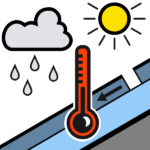
The problem is caused by an increasing weakening of the snow cover due to water ingress, either through melting or rain.
Types of avalanches to be expected
- Wet slab avalanches
- Wet loose snow avalanches
- Mostly spontaneous releases
Spatial distribution
If solar radiation is the main cause of the problem, the spread depends mainly on altitude and exposure. If rain is the cause, all exposures are affected.
Position of the weak layer in the snowpack
Somewhere in the snow cover.
Release mechanism
Wet snow slab avalanches: Weakening and breaking of former weak layers in the snowpack or sliding of layers at water horizons. Rain also places an additional load on the snowpack. Wet loose snow avalanches: Loss of bonds between snow crystals.
Duration
- Hours to days
- Rapid loss of stability possible
- The first penetration of water deeper into the snowpack is critical as soon as the snowpack is 0 °C isothermal.
Spontaneous avalanches are more likely in the afternoon than in the morning (unless rain is the main cause of the problem).
Slippery snow problem
Problem detection in the field
Although sliding snow cracks (fish mouths) are easy to recognize, it is virtually impossible to predict when they will trigger an avalanche. Avalanches can also be triggered without the formation of sliding snow cracks.
Recommended behavior
Do not stay in the vicinity of sliding snow cracks.
Features
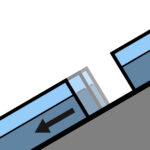
The entire snowpack slides down on smooth ground such as grassy slopes or smooth rocky areas. High activity of sliding snow avalanches is typically associated with a thick snowpack with few or no weak layers. Avalanches can occur in both dry, cold and wet, 0°C isothermal snowpacks. It is almost impossible to predict the time of departure of sliding snow avalanches, although they usually announce themselves through sliding snow cracks (so-called fish mouths).
Types of avalanches to be expected
- Sliding snow avalanches: dry/cold and wet/0 °C isotherm
- Almost exclusively spontaneous releases. Artificial releases are unlikely.
Spatial distribution
Especially on smooth ground. In all exposures, but more often on south-facing slopes.
Position of the weak layer in the snowpack
At the transition from the snow cover to the ground.
Release mechanism
Sliding snow avalanches are triggered by the loss of friction on a damp and wet layer between the snowpack and the ground.
Duration
Days to months, triggering possible throughout the winter. Triggering can occur at any time of day or night. In spring, they usually occur later in the day.
Sources
You can find detailed information in several languages at the following links: